 For over a century, Black lawyers in America have been fighting the good fight to help bring equity and access to the African American community.
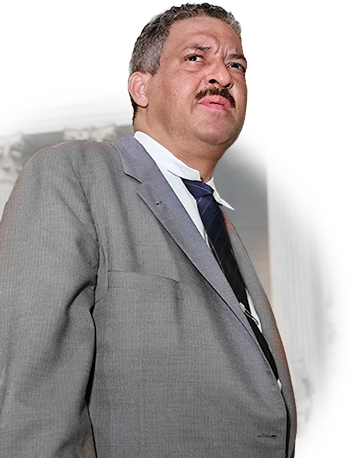
Before Thurgood Marshall, lesser-known lawyers such as Attorney Cornelius J. Jones laid the foundation. Jones prosecuted the first documented case for reparations for slavery, Johnson v. McAdoo. And then there was Charles Hamilton Houston, a lawyer and legal strategist. He trained and mentored Justice Thurgood Marshall and other lawyers and developed the legal strategy for fighting racial discrimination in schools and housing.
Now, we have a set of new Black lawyers who have claimed or will claim the top spot in the White House. First, former President Barack Obama, who was previously trained as a civil rights attorney, and now possibly Presidential nominee Kamala Harris. She has already made “herstory” as the first Black female presidential candidate. She’s also a former prosecutor.
 Unlike other career fields, the legal career is critical to fighting unjust laws, setting precedent and defending the rights of people and organizations. It is necessary and crucial for Black Americans to be in this career. Over the last five years, there has been an increase in Black students pursuing law but not at the same pace as Hispanic and Asian students, according to 2022 data from the American Bar Association (ABA). In 2018, there were 9,045 Black students who studied law; in 2022, that number barely increased to 9,132. However, one sleeper stat that is correlated with the Black population is the category of “two or more races” or what the Black community often calls “mixed.” In 2018, this demographic of law students went from 3,891 to 4,891, according to the ABA. It’s easy to assume that the latter category also contains Black students.
 Thank God for our HBCUs – which remain among the top law schools churning out future Black lawyers. Howard University produces the most Black law students, as do other prominent institutions, such as the Thurgood Marshall School of Law at Texas Southern University, the Southern University Law Center in Baton Rouge, North Carolina Central University School of Law, and the College of Law at Florida’s FAMU.
 However, one big obstacle to watch is how The Supreme Court’s action on race-based applications will impact law schools.
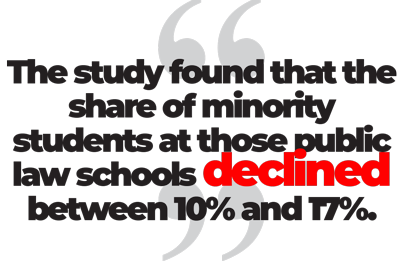
Recently, three law professors published Northwestern Public Law Research Paper No. 23-50, which examined race-ban policies on enrollment. They analyzed data at 23 public law schools from 1980 to 2021, where race-based affirmative action bans were enacted. The study found that the share of minority students at those public law schools declined between 10% and 17%.
“That decline was even larger at “top 20” law schools (as ranked by U.S. News & World Report), where the share of minority students plummeted between 36% and 47% following state-level affirmative action bans. Black and Latine students accounted for almost all of the declines,” according to the paper.
T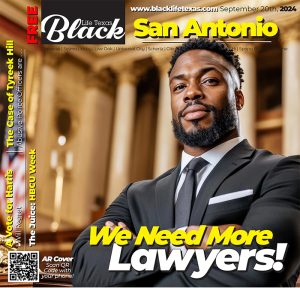 he fallout from affirmative action bans may be felt well beyond higher education, researchers say. Top law schools are often feeders to leadership positions in government and private industry.
 “Lawyers make up a tenth of CEOs, a third of state governors, more than a third of U.S. House members, more than half of U.S. senators, and almost all judges and prosecutors,” say the researchers. “A decline in racial diversity in law schools, particularly elite law schools, may lead to a decline in racial diversity in these key leadership roles.”
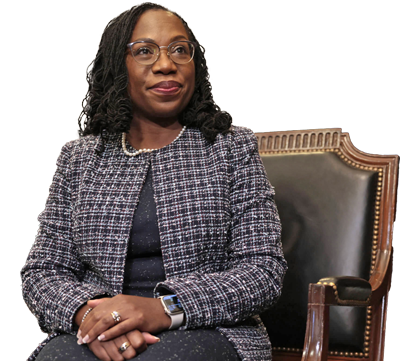
It’s these elite law schools (Harvard) that produced former President Barack Obama and U.S. Supreme Court Judge Ketanji Brown Jackson. Harvard also produced Bryan Stevenson, who is famous for the “Just Mercy” book. Stevenson is the executive director of the Equal Justice Initiative (EJI) in Montgomery, Alabama, which has won major legal challenges, such as eliminating excessive and unfair sentencing and exonerating innocent death row prisoners. He also led the creation of EJI’s Legacy Sites, including the Legacy Museum, National Memorial for Peace and Justice, and Freedom Monument Sculpture Park – which attracts thousands of visitors to Montgomery annually.
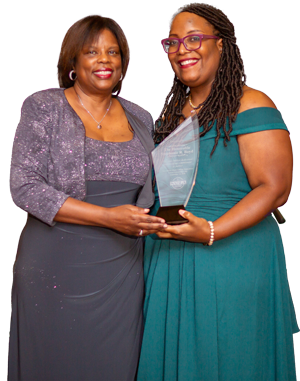
Back in the Alamo City, the San Antonio Black Lawyers Association recently elevated and recognized lawyers in the community at its seventh annual gala on September 14. The theme was The Beat of Justice: Hip Hop’s Influence on Law and Justice, and the Association bestowed Bexar County Judge Stephanie Boyd with its Legend Award. Other awardees included San Antonio Municipal Judge Elizabeth Martinez and Trinity University General Counsel Erika D. Robinson. Maria Stevenson Greene received the Clarence McGowan Award, and two St. Mary’s University’s Law School students, Daeja Hall and London Delks, received awards.