
 The Democratic Party may be on the course to a turbulent national convention in August in Chicago, Illinois. The problem is specifically tied to the incumbent President Joe Biden and his health, both mental and physical. To add to the problem, Biden’s political support has been in the 30’s. It continues to suffer because of his failure to respond to especially young voters’ opposition to providing the bombs that are destroying human life in Gaza. No president with such a low approval rating has ever won re-election.
Despite having wrapped up the nomination with 3,896 delegates committed to him, after his poor performance in the first presidential debate, there have been calls for him to drop out of the race. Some say he can’t beat Donald Trump in the general election. Texas Congressman Lloyd Doggett was the first elected official to call for him to drop out. However, Biden has made it clear that he has no plans to step down and was the most qualified candidate to beat Trump. The President participated in two additional events after his disastrous debate with Trump in late June. A one-on-one interview with ABC’s George Stephanopoulos and a press conference following the NATO assembly in the United States. Even though he appeared to be much more coherent in those two events, it still did not satisfy members of Congress as the number calling for him to step down continued to grow.
 His detractors soon spread from the Capitol to Democratic big-time donors to include Hollywood stars. After attending a fundraiser in Hollywood, George Clooney publicly announced that he would not support Biden. Over $90 million that was originally designated to the campaign was frozen. If Biden remains adamant about staying in the race and his detractors insist that someone other than the President be the nominee, the Democratic convention will confront the same kind of acrimony that occurred in their convention 56 years ago.
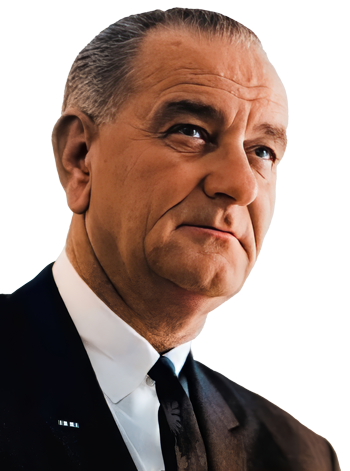 The year was 1968 and the White House was occupied by Democratic President Lyndon Baines Johnson. It was an election year, and it was assumed that he would run for re-election. Politics had been his life, and he was still young enough to serve another term. But just like Joe Biden today, his approval rating was in the mid-30s. He was losing support, especially among the young voters, because of the Vietnam War, similar to Biden’s loss of support among young people. Johnson, however, did what Biden refuses to do. On March 31, 1968, he went on national television and announced that he would not seek re-election. It appeared then that one of the three anti-war candidates, Eugene McCarthy, Bobby Kennedy, or George McGovern, would get the nomination. But on April 27, Vice President Hubert
 Humphrey announced his candidacy for President. Because he was Johnson’s Vice President, he would continue the President’s war policy. On June 5th, Kennedy was assassinated just after winning the primary in California. It appeared that he would challenge Humphrey with that victory. But that ended with a bullet fired from the gun of a distraught Palestinian Sirhan Bishara Sirhan.
Humphrey had picked up all the delegates committed to President Johnson, giving him enough to be awarded the nomination. He came to Chicago with over 200 more delegates than he needed for the nomination. However, the anti-war faction put up a protest and attempted to replace Humphrey with Senator Ted Kennedy, brother of Bobby. For the four days of the convention, pandemonium prevailed inside and outside the convention. Anti-war demonstrators clashed with approximately 25,000 – a mix of Chicago Police, Illinois National Guard, and 1,000 Secret Service agents during that week. This confusion resulted from a divided Democratic Party and Humphrey’s failure to unite them. The Republican Party, joyful with the problems Humphrey could not resolve, went on to victory with the election of Richard M. Nixon on November 5, 1968.
Next month, August 19th, the Democrats will again meet in Chicago, Illinois and the tension will be as thick as it was back in 1968. Biden has amassed an overwhelming 3,896 delegate votes out of a total of 4,532. It takes only 1,976 to win the nomination. However, if his detractors arrive at the convention determined to steal votes from him, there will be a struggle, just as it was in 1968. The rule is that delegates are expected to vote for the candidate they support when they arrive at the convention. However, during the NATO press conference, Biden said that delegates are free to do whatever they want, including nominating a different candidate. Shortly after that statement, he did whisper, “It’s not going to happen.”
The DNC rules leave room on the first roll call vote for what is called “good conscience.” It simply means that a delegate can vote according to his conscience. That seldom happens, and Biden is correct when he whispers that his delegates will stick with him.
If somehow a sufficient number of those 3,896 delegates are convinced by the few who do not want Biden as the candidate to change their vote, all pandemonium will break out at the convention. It will be a repeat of 1968. Whomever they nominate other than Biden will find it difficult to pull the party together, as with Humphrey. In this case, the Republican candidate will not have to defeat the Democrats. They will do that themselves as they did 56 years ago.